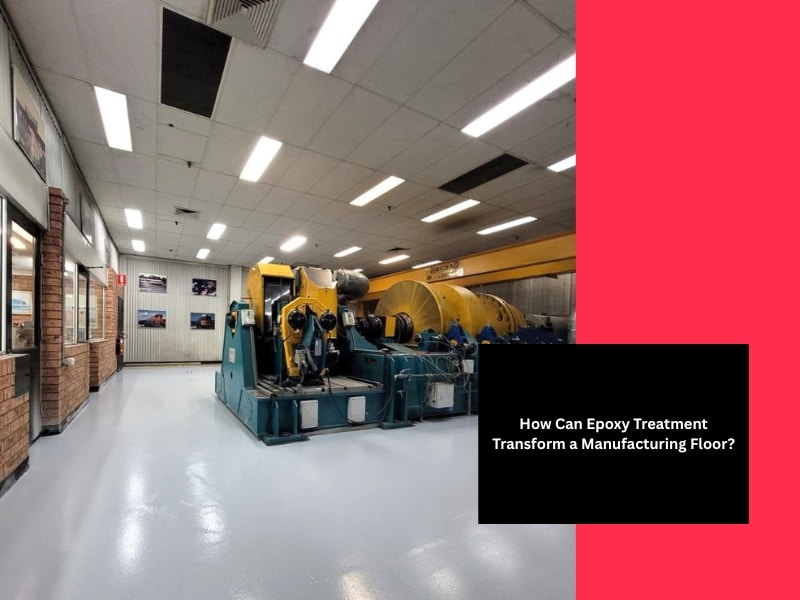
In manufacturing environments, the flooring underpins everything from machinery stability to worker safety. Yet many facilities underestimate how much the right floor surface can upgrade operations. An epoxy treatment is one of the most effective ways to turn a worn, cracked, or porous concrete slab into a durable, seamless, and high-performance surface. In this blog, you’ll explore the underlying causes of floor degradation, the risks of ignoring them, and how epoxy systems deliver long-term resilience and safety. By the end, you’ll see why investing in an epoxy floor upgrade is more than aesthetic—it’s strategic for production, maintenance, and compliance.
Why do manufacturing floors wear out so quickly?
Industrial facilities put constant pressure on their floors. Heavy machinery, forklifts, frequent foot and vehicular traffic, chemical spills, and thermal cycling all depress or chip standard concrete surfaces. Over time, the signs of industrial flooring damage appear: cracks, flaking, spalling, pitting, and delamination. Here are common contributors:
- Point loads from heavy machinery and racks cause microfractures that propagate outward.
- Repeated loading cycles fatigue the surface and subsurface layers.
- Chemical exposure (oils, acids, solvents) etches concrete and weakens its integrity.
- Moisture vapour transmission from below the slab undermines the adhesion of coatings or finishes.
- Thermal expansion and contraction cause micro-movement that worsens joints or cracks.
These processes compound over years, so what looks like a hairline crack today can evolve into wide fissures or concrete chunks tomorrow. The result? A floor that degrades faster than expected and demands frequent repairs.
Because standard concrete lacks a protective topcoat, the surface is vulnerable. As the damage spreads, unevenness grows, dust increases, and the floor loses its ability to support high-precision operations. This is especially problematic in manufacturing zones where alignment, cleanliness, and smoothness matter.
What risks arise when 2000 sqm factory floors lack epoxy treatment?
In a large facility—say, 2000 sqm—a neglected or untreated floor magnifies risks. Without a robust epoxy layer, cracks propagate further, surfaces become porous, and contaminants penetrate deeply. The lack of epoxy treatment means the floor is left exposed to mechanical, chemical, and environmental stresses with minimal protection. Some of the key risks include:
- Accelerated wear and tear across wide areas, increasing repair cycles.
- Dusting and debris from degraded concrete, leading to particle contamination of products.
- Moisture ingress and chemical migration under the slab, undermining floor stability.
- Poor adhesion of future coatings occurs when the base becomes inconsistent or weakened.
In summary: skipping epoxy treatment in a large industrial footprint isn’t saving cost—it’s escalating long-term liabilities. Over time, the unprotected surfaces become a liability rather than a neutral base.
How does poor flooring impact safety and efficiency?
Once flooring is compromised, the chain of consequences ripples through safety, productivity, and maintenance burdens. Serious workplace floor hazards include slips, trips, and falls—especially when surfaces are uneven, chipped, or hold liquids. Imagine a worker navigating a cracked patch near a pallet rack: that’s a real trip hazard. Furthermore:
- Equipment alignment issues arise when machines rest on uneven or shifting slabs, leading to vibration, miscalibration, and increased maintenance.
- Material handling delays occur when wheeled carts or forklifts struggle with rough areas, reducing throughput.
- Dust and airborne particles from broken concrete degrade air quality and can damage sensitive machinery or products.
- Downtime costs soar when repairs interrupt operations or when safety incidents necessitate investigations and retraining.
In practice, these hazards erode margins and morale. The cumulative drag on efficiency—unseen day-to-day—makes the floor a silent bottleneck.
What are the main benefits of epoxy treatment for factories?
Epoxy coatings offer a suite of features that directly address the problems above. When applied correctly, they restore and fortify your floor. Here are the key benefits:
- Seamless surface, meaning no joints or gaps to trap debris or moisture.
- High abrasion resistance, so machinery and traffic wear the coating—not the concrete underneath.
- Chemical resistance, defending against oils, acids, cleaning agents, and solvents.
- Low porosity prevents moisture ingress and dusting.
- Easy to clean and maintain, with smooth surfaces that resist bacterial growth or contamination.
- Aesthetic improvement, allowing better floor demarcation, safety markings, and high-gloss finishes.
- An extended service life delays the need for major repairs or replacement.
To illustrate, here’s a comparison table:
| Issue without epoxy | Improvement with epoxy coating |
| Surface cracks, dusting | Seamless, non-porous finish |
| Chemical etching of concrete | Strong chemical resistance |
| Frequent repair cycles | Long maintenance intervals |
| Poor floor cleanliness | Easier cleaning, better hygiene |
| Uneven wear patterns | Uniform surface resilience |
Beyond these technical gains, implementing the floor coating systems for manufacturing facilities positions your site for compliance, safety standards, and quality control.
How long does epoxy treatment last in a manufacturing facility?
One common question is: How durable is epoxy in a heavy-use industrial environment? The answer depends on several variables, but with proper design and installation, epoxy floors in factories can last 10 to 20 years or more before full replacement becomes necessary. Here’s what influences longevity:
- Quality of surface preparation (grit-blasting, profiling, moisture mitigation).
- Type of epoxy system (standard, high-build, polyaspartic or hybrid systems).
- Thickness applied — thicker systems tolerate heavier abuse.
- Load conditions — heavy point loads or impact zones may wear faster.
- Maintenance regime — scheduled cleaning, inspections, and repairs prolong life.
That said, many high-load zones may require spot repairs or recoat cycles every 5 to 8 years. But full substrate repair or replacement is rare when the system is well engineered. Given the cost of downtime and patching, this durability is a considerable advantage.
Why seamless surface coatings matter for large industrial areas
When you scale up to large factory zones, the value of seamless surface coatings becomes clear. Joints, seams, or breaks in flooring are the weak links that trap moisture, dirt, or chemical ingress. A continuous surface removes these vulnerabilities.
Why seamless coatings matter:
- Reduced maintenance — fewer cracks to monitor or repair.
- Improved hygiene in clean or semi-clean environments — no crevices for contaminants.
- Uniform load distribution — stress spreads evenly, reducing localised failures.
- Better aesthetics and floor demarcation across wide expanses.
In a manufacturing layout, seamless coatings also allow safety lines, walkways, and zones to be masked or sealed into the surface rather than simply painted over damaged concrete. This reduces rework and ensures the floor looks good while performing reliably across high-traffic zones.
Final thoughts on upgrading manufacturing floors with epoxy
Upgrading to an epoxy floor is not merely cosmetic — it’s an investment in operational stability, safety, and long-term efficiency. With a well-designed system, your facility can resist the common wear mechanisms, maintain clean and safe surfaces, and reduce hidden maintenance burdens.
When considering a floor transformation, examine not only the specs but also the supplier credentials, installation practices, and aftercare support. Holistic systems work far better than piecemeal fixes. If you need tailored advice or assistance, consider the support resources from Ultimate Epoxy Floors to ensure your surface selection meets your demands.