
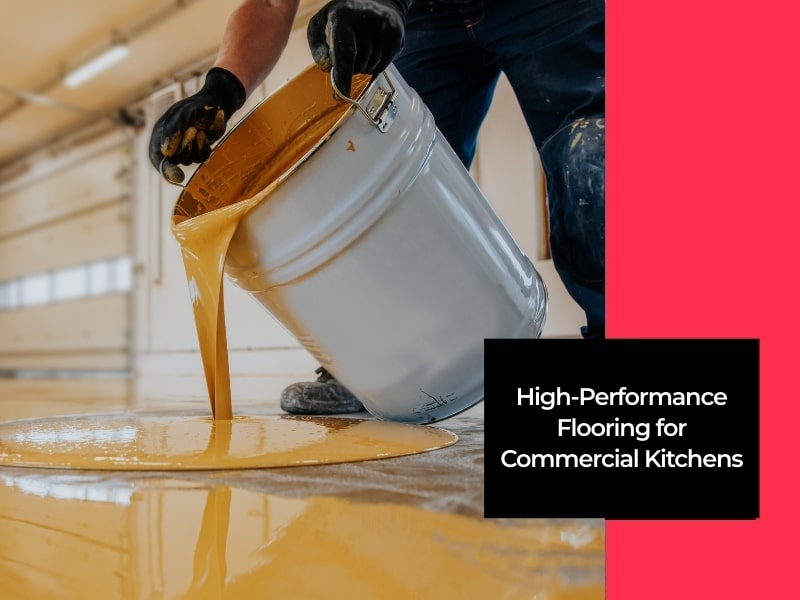
Commercial kitchens require flooring that can handle heavy foot traffic, hot spills, harsh cleaning chemicals, and strict hygiene standards. Epoxy flooring provides a seamless, non-porous surface that is slip-resistant, chemical-resistant, and easy to clean, making it one of the most practical and durable choices for professional food preparation environments across Australia.
Key Takeaways
- Epoxy flooring creates a seamless, non-porous surface that eliminates grout lines and gaps where bacteria and moisture can accumulate.
- Slip-resistant finishes can be incorporated to meet safety requirements in wet, high-traffic kitchen environments.
- Epoxy is highly resistant to commercial cleaning chemicals, hot water, and the physical demands of a working kitchen.
- Surface preparation is critical — professional installation ensures bonding, longevity, and a finish that performs under pressure.
- A correctly installed epoxy floor is low maintenance, easy to clean, and built for long-term performance.
- Professional assessment of your existing substrate is essential before specifying a flooring system.
Why Flooring Choice Matters in a Commercial Kitchen
A commercial kitchen floor is one of the most demanding surfaces in any built environment. It must cope with constant foot traffic, dropped equipment, hot grease, steam, acidic food waste, and repeated exposure to industrial-strength cleaning agents, often multiple times a day.
The wrong flooring choice creates real operational problems: cracked tiles that trap bacteria, slippery surfaces that put staff at risk, or coatings that deteriorate quickly and require frequent replacement. Choosing the right system from the start reduces downtime, maintenance costs, and hygiene risks.
Epoxy flooring systems have become a standard choice for commercial kitchens, food processing areas, and hospitality environments because they address each of these challenges in a single, professionally installed solution.
Who Is Commercial Kitchen Epoxy Flooring For?
Epoxy flooring for commercial kitchens is suited to a broad range of operators and facilities, including:
- Restaurants, cafes, and fast-food outlets
- Hotel and function centre kitchens
- Institutional kitchens — hospitals, aged care, schools, and universities
- Food manufacturing and processing facilities
- Commercial catering businesses
- New kitchen builds and full kitchen renovations
Applications and Use Cases
Kitchen Floors and Prep Areas
The main kitchen floor is the most heavily trafficked area in any food service operation. Epoxy provides a continuous, joint-free surface that resists impacts from dropped equipment and trolleys, while remaining easy to mop down and sanitise at the end of each service.
Cool Rooms and Refrigerated Storage
Epoxy systems can be specified for cool rooms and refrigerated areas where temperature cycling, condensation, and moisture are ongoing concerns. (Confirm suitability with Ultimate Epoxy Floors for specific temperature requirements.)
Dishwashing and Wet Areas
Dishwashing bays and wet areas are among the highest-risk zones in any kitchen for slips and falls. Epoxy flooring with an anti-slip aggregate finish reduces surface slipperiness without compromising cleanability.
Food Processing and Manufacturing Floors
For larger food processing operations, epoxy flooring provides a robust, hygienic base layer that can be tailored to the specific chemical and mechanical demands of the production environment. Coved skirting options are also worth considering for seamless wall-to-floor junctions. (Confirm with Ultimate Epoxy Floors.)
Epoxy Flooring System Options for Commercial Kitchens
Standard Epoxy Coatings
A standard epoxy coating system provides a smooth, seamless finish that is chemical-resistant and easy to clean. It is suitable for lower-intensity commercial kitchen environments where extreme mechanical loads are not a daily factor.
Heavy-Duty Epoxy Systems
High-traffic commercial kitchens, food processing facilities, and institutional operations typically require a thicker, more robust system. Heavy-duty epoxy or polyurethane hybrid systems offer superior impact and abrasion resistance. (Confirm available heavy-duty systems with Ultimate Epoxy Floors.)
Anti-Slip Finishes
Anti-slip aggregate can be broadcast into the epoxy surface during installation to provide improved traction in wet conditions. The level of texture can be adjusted to balance slip resistance with ease of cleaning, a key consideration in food preparation environments.
Polished Concrete as a Complementary Option
In some commercial kitchen environments, polished concrete may be considered for specific zones such as front-of-house, servery areas, or storage corridors.
To find out more about this option, see our concrete polishing services page.
Materials, Performance, and Safety Considerations
Surface Preparation: The Most Important Step
No epoxy system performs better than the substrate it is applied to. In commercial kitchens, existing floors often contain contamination from cooking oils, cleaning chemicals, or previous coatings.
Professional surface preparation, typically diamond grinding or shot blasting, removes contamination and creates the mechanical profile required for the epoxy to bond correctly.
Cutting corners on preparation is the single most common cause of premature epoxy failure. Professional installers assess the substrate before specifying a system, not after.
Chemical and Moisture Resistance
Commercial kitchen floors are regularly exposed to acidic food waste, fats, cleaning agents, and hot water. A correctly specified epoxy system is designed to withstand this chemical exposure without degrading, blistering, or discolouring. Moisture vapour transmission from the concrete substrate should also be assessed before installation.
Slip Resistance
Slip resistance is a critical safety factor in any kitchen environment. Epoxy systems with anti-slip aggregates provide improved traction underfoot, reducing the risk of slips and falls in wet or greasy conditions. The appropriate texture level depends on the specific application and must be considered as part of the system design.
Hygiene and HACCP-Aligned Flooring Design
Food safety management systems such as HACCP (Hazard Analysis and Critical Control Points) place significant emphasis on the design of the physical environment, including floor surfaces. Epoxy flooring supports HACCP-aligned facility design by providing:
- A seamless, joint-free surface with no grout lines, cracks, or gaps where bacteria or moisture can accumulate
- A non-porous finish that does not absorb food waste, liquids, or cleaning chemicals
- A surface that can be thoroughly cleaned and sanitised with commercial-grade cleaning agents
- Consistent coverage across drains and wall junctions when correctly detailed
Note: Ultimate Epoxy Floors does not provide compliance certification. Confirm specific regulatory or food safety requirements with your relevant authority before specifying a flooring system.
Design, Finish, and Practical Benefits
Beyond performance, the aesthetic and practical advantages of epoxy flooring make it a sensible long-term investment for commercial kitchen operators.
The seamless finish reflects light and gives the kitchen a clean, professional appearance , relevant not just for staff morale but also for health inspections and venue tours. Epoxy is available in a range of colours, allowing operators to colour-code different zones (such as raw food prep versus cooked food areas) as part of a broader food safety strategy.
Day-to-day maintenance is minimal. The floor can be swept, mopped, or pressure-washed without risk of damage to the surface coating. There are no grout lines to scrub and no tiles to crack or lift, reducing cleaning time and maintenance call-outs over the life of the floor.
Installation Process and What to Expect
Professional installation of a commercial kitchen epoxy floor typically follows a structured process to ensure durability and a consistent finish.
- Site Assessment The existing substrate is inspected for cracks, contamination, moisture vapour transmission, and surface profile. Any structural repairs are identified at this stage.
- Surface Preparation Diamond grinding or shot blasting removes existing coatings, contamination, and weak surface material. This creates the mechanical profile required for correct adhesion.
- Repairs and Priming Cracks and low spots are repaired. A primer coat is applied to penetrate and seal the concrete substrate.
- Epoxy System Application The specified epoxy system is applied in the required number of coats, including anti-slip aggregate if specified. Each layer is applied and allowed to cure before the next.
- Curing and Handover The floor requires a curing period before it can be returned to full service. (Confirm cure times with Ultimate Epoxy Floors for your specific system and environment.)
Common Mistakes and Buyer Pitfalls
Many issues with commercial kitchen epoxy floors come down to decisions made before or during installation rather than the product itself. Be aware of the following:
Choosing the wrong system for the load – Not all epoxy coatings are rated for heavy industrial use. A thin decorative coating applied in a high-traffic kitchen with trolleys and heavy equipment will fail prematurely. Specify the right system for your environment.
Skipping or rushing surface preparation – Inadequate surface preparation is the primary cause of delamination and early failure. Do not proceed with installation on a contaminated or structurally compromised substrate.
Ignoring moisture in the substrate – Moisture vapour trapped beneath an epoxy coating causes blistering and failure. A moisture test should be part of every pre-installation assessment.
Applying epoxy over existing tiles – Epoxy applied over existing ceramic or quarry tiles may appear cost-effective, but differential movement and adhesion issues often lead to failure. Removal of existing tiles is frequently the better long-term option.
Underestimating downtime – Epoxy systems require curing time before the area can be returned to full use. Factor installation and cure time into operational planning, particularly for kitchens that run continuously.
Ready to Specify the Right Floor for Your Commercial Kitchen?
Whether you’re fitting out a new kitchen, replacing a failing floor, or upgrading an existing facility, the right epoxy system makes a measurable difference to safety, hygiene, and long-term operating costs.
Request a Quote or Book an On-Site Assessment Contact Ultimate Epoxy Floors today: ultimateepoxyfloors.com.au/contact
Ask About Flooring Options for Your Space Not sure which system is right for your kitchen? Speak with our team for practical, no-obligation advice tailored to your environment and budget.
About Ultimate Epoxy Floors
Ultimate Epoxy Floors provides professional epoxy flooring solutions for residential, commercial, and industrial spaces across Australia. Services focus on durable, low-maintenance flooring systems installed with attention to preparation, performance, and finish quality. (Confirm exact service areas if required.)
Frequently Asked Questions
Is epoxy flooring suitable for commercial kitchens?
Yes, epoxy flooring is widely used in commercial kitchens due to its seamless, non-porous surface and resistance to chemicals, moisture, and heavy use. Epoxy provides a hygienic, easy-to-clean floor that eliminates the grout lines and cracks associated with traditional tiles. When correctly specified and installed, it holds up to the demanding conditions of a professional kitchen environment and supports hygiene management practices.
What makes epoxy flooring hygienic for food preparation areas?
Epoxy creates a continuous, non-porous surface with no joints or grout lines where bacteria, moisture, or food particles can accumulate. Unlike tiled floors, an epoxy surface can be fully cleaned and sanitised in a single mopping process. There are no grout lines to harbour bacteria, no tiles to crack and allow moisture ingress, and no surface texture that traps food waste, making it a practical choice for food safety-focused environments.
Does epoxy flooring meet HACCP requirements?
Epoxy flooring supports HACCP-aligned facility design by providing a seamless, non-porous, easy-to-clean surface — however, compliance with specific food safety regulations must be verified with the relevant authority. HACCP and other food safety frameworks place requirements on the physical environment, including floor surfaces. While epoxy flooring aligns well with these principles, Ultimate Epoxy Floors does not provide compliance certification. Confirm your specific regulatory requirements before specifying a system.
Can epoxy floors be made slip-resistant?
Yes, anti-slip aggregate can be incorporated into the epoxy surface during installation to improve traction in wet or greasy conditions. The level of texture can be adjusted to balance slip resistance with ease of cleaning, an important consideration in food service environments where cleaning is frequent and thorough. The appropriate specification depends on the specific area and its use.
How long does a commercial kitchen epoxy floor last?
The lifespan of a commercial kitchen epoxy floor depends on the system specified, the quality of surface preparation, and the level of ongoing maintenance. A correctly installed, heavy-duty epoxy system in a well-maintained commercial kitchen can provide many years of service. Floors that experience higher mechanical loads, chemical exposure, or inadequate cleaning may require maintenance or recoating earlier. (Confirm expected lifespan for specific systems with Ultimate Epoxy Floors.)
How long does installation take, and when can the kitchen reopen?
Installation and cure time varies depending on the system, the size of the area, and environmental conditions. Most commercial kitchen epoxy installations are completed over one to several days, with an additional curing period before the floor can be returned to full service. Downtime planning is essential for kitchens in continuous operation. (Confirm specific timelines with Ultimate Epoxy Floors for your project.)
Can epoxy be applied over existing kitchen tiles?
Epoxy can be applied over some existing tile surfaces, but this approach is not always recommended and requires a careful assessment of the substrate. Tile surfaces must be structurally sound, clean, and properly profiled before epoxy application. In many commercial kitchen environments, the better long-term solution is to remove existing tiles and apply the epoxy system directly to the concrete slab. Your installer should assess this on-site before making a recommendation.
What is the difference between standard and heavy-duty epoxy for kitchens?
Heavy-duty epoxy systems are thicker and more impact-resistant than standard coatings, making them better suited to high-traffic commercial kitchen environments with heavy equipment. Standard epoxy coatings are appropriate for lighter commercial applications, while heavy-duty systems, including polyurethane hybrids, provide greater durability under repeated mechanical stress, trolley traffic, and high-frequency cleaning cycles. System selection should be based on an assessment of the specific environment. (Confirm system options with Ultimate Epoxy Floors.)
How do I maintain a commercial kitchen epoxy floor?
Regular sweeping and mopping with appropriate cleaning agents is typically sufficient to maintain an epoxy floor in a commercial kitchen. Avoid using abrasive scrubbing tools that can scratch the surface over time. Commercial-grade cleaning chemicals are generally compatible with epoxy, but confirm suitability for any specialist chemical products with your installer. Periodic inspection for chips, cracks, or areas of wear allows minor repairs to be made before they develop into larger issues.
Where can I learn about polished concrete as an alternative to epoxy?
Polished concrete is an alternative or complementary option to epoxy for some commercial kitchen zones and ancillary spaces.
For more information on polished concrete services available from Ultimate Epoxy Floors, visit our concrete polishing services page.