
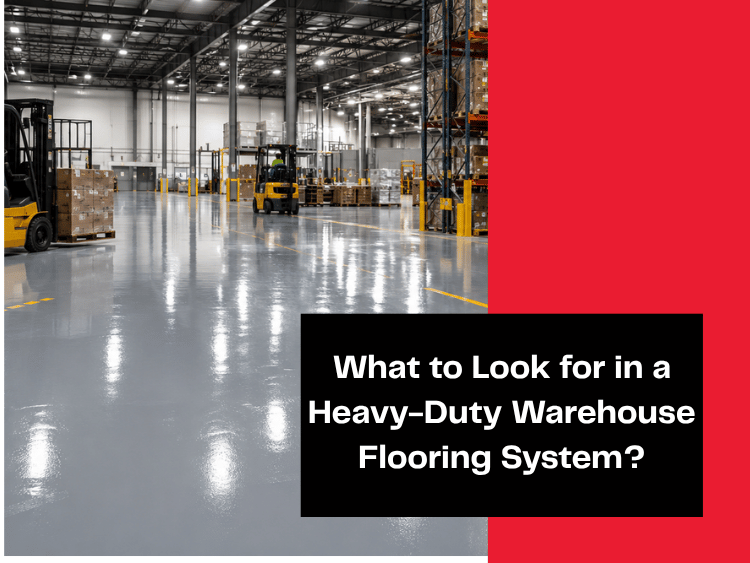
Warehouse and storage floors operate under conditions that expose every weakness in a poorly specified surface. Forklift traffic, heavy pallet loads, chemical spills, and constant foot movement all place sustained demand on the floor beneath them.
Selecting the right warehouse flooring system from the outset is not a cosmetic decision. It is an operational one that affects safety, maintenance costs, and the long-term function of the facility.
This article guides warehouse operators, facility managers, and commercial developers through the key performance requirements of industrial floor coatings, the systems best suited to those conditions, and why professional specification and installation matter.
Why the Right Floor Coating Matters in a Warehouse
Uncoated or underspecified concrete does not hold up well under sustained industrial use. Standard concrete is porous and relatively soft at the surface. Under repeated forklift passes and heavy rolling loads, it begins to dust, crack, and break down. Once surface degradation starts, it accelerates quickly.
A deteriorating floor creates real operational problems. Dust from concrete breakdown contaminates stock and machinery. Surface cracks catch pallet wheels, creating trip hazards. Spills from oils, fuels, and chemicals penetrate the slab, making it increasingly difficult to clean.
Reactive repairs to a failing warehouse floor are disruptive and expensive. Grinding back damaged areas, filling cracks, and reapplying coatings mid-operation interrupts workflow and adds costs that a well-specified floor from the start would have avoided.
The right heavy-duty floor coating protects the concrete substrate, reduces surface wear, and provides a platform that supports safe, efficient daily operations without constant intervention.
What Heavy-Duty Really Means for a Warehouse Floor
Not every facility places the same demands on its floor. A pick-and-pack logistics warehouse operates differently from a cold storage facility or a heavy manufacturing plant. Understanding what heavy-duty means for a specific site is the starting point for any flooring specification.
Forklift and pallet jack traffic: Forklifts exert significant point pressure on the floor, particularly when turning or carrying loaded pallets. The floor coating needs to resist this rolling load without chipping, cracking, or delaminating at the surface.
Foot traffic volume: High-volume logistics and fulfilment environments see constant foot movement across large floor areas. The surface needs to maintain its integrity and slip resistance under this sustained pedestrian load.
Chemical exposure: Warehouses regularly handle oils, fuel residues, hydraulic fluids, and commercial cleaning agents. A coating that cannot resist chemical penetration will soften, stain, and break down over time.
Impact resistance: Dropped loads, falling equipment, and accidental impact from machinery are part of warehouse operations. The floor coating needs to absorb and resist these impacts without fracturing or delaminating.
Specifying a system that accounts for all of these factors produces a floor that performs consistently rather than one that handles some conditions well and fails under others.
Coating Systems Suited to Warehouse and Storage Floors
Several resin-based coating systems are suitable for warehouse and storage environments. Each offers a different performance profile, and contractors should select the right system based on the floor’s specific use, traffic type, and site load requirements.
Epoxy floor coatings are widely used in warehouse environments because of their strong adhesion to prepared concrete, surface hardness, and abrasion resistance. Warehouse epoxy flooring provides a durable, cleanable surface that withstands regular forklift and foot traffic. Epoxy systems suit facilities with moderate chemical exposure and where a hard, protective surface finish is the primary requirement.
Polyurethane systems offer greater flexibility than standard epoxy, making them well-suited to environments where the substrate experiences some movement or where temperature fluctuations are a factor. Polyurethane warehouse flooring also offers strong chemical resistance and performs well in facilities that use aggressive cleaning agents or experience frequent liquid exposure. In areas where abrasion and wear are the primary concerns, polyurethane top coats can significantly extend the service life of a flooring system.
Polyaspartic coatings cure faster than epoxy and polyurethane systems, which allows facilities to return to service more quickly after installation. They also offer good UV stability, making them suitable for warehouse areas with natural light exposure. Contractors often use polyaspartic systems when minimising facility downtime during installation is a priority.
The right system for a given warehouse depends on the site’s specific conditions. A flooring contractor experienced in industrial epoxy floors will assess these conditions and recommend the most appropriate product combination rather than applying a single solution across every environment.
The Role of Surface Preparation in Long-Term Performance
Surface preparation is the single most important factor in how well a floor coating performs over time. A coating applied to a poorly prepared substrate will lose adhesion, blister, or delaminate regardless of the quality of the product used.
Mechanical preparation, typically through diamond grinding or shot blasting, opens the concrete surface and creates a profile that allows the coating to bond correctly. This step removes surface contaminants, laitance, and any previous coatings that could compromise adhesion.
Dust-free grinding methods keep the work environment cleaner during preparation and produce a more controlled surface profile. This matters in active facilities where dust management during installation is an operational consideration.
Before any coating goes down, contractors must assess and address existing cracks, control joints, and areas of substrate weakness. Cracks that remain unrepaired before coating will reflect through the finished surface and can cause the coating to fail along those lines under load.
Moisture in the substrate should also be assessed. Elevated moisture levels can impair coating adhesion and lead to long-term performance issues. Experienced installers test the slab and factor in moisture management into the specification before finalising product selection.
Getting preparation right is not optional. It is the foundation on which every other performance claim about a coating system depends.
Long-Term Cost Efficiency: Why Quality Flooring Pays Off
Warehouse operators who specify a quality flooring system upfront consistently spend less on floor-related costs over the life of the facility. The comparison between a well-installed coating system and a reactive maintenance approach favours the upfront investment across almost every variable.
A properly specified storage facility flooring system reduces the frequency of repairs, keeps maintenance straightforward, and avoids the production downtime that comes with emergency floor remediation. When a floor fails mid-operation, the cost is not just the repair itself. It includes disruptions to workflow, safety risks to staff, and potential damage to stock and equipment.
A durable floor coating also contributes to safer working conditions. A surface that resists dusting, maintains slip resistance, and withstands forklift traffic reduces the likelihood of incidents that carry their own operational and compliance costs.
Operators should treat warehouse floor specification as a capital investment rather than a maintenance expense. The right system, correctly installed, delivers consistent performance that supports the facility’s operational efficiency for years with appropriate maintenance.
Line Marking and Safety Considerations
Warehouse environments typically require defined traffic lanes, pedestrian walkways, safety zones, and equipment bays. Integrating line marking during floor installation is the most efficient way to achieve this.
Applying line marking to a freshly coated surface produces cleaner adhesion and a more durable result than marking over an older or weathered floor. Contractors can incorporate line marking into the installation scope to avoid a second mobilisation and ensure the markings bond correctly to the coating beneath.
Frequently Asked Questions
What is the best floor coating for a warehouse? The most appropriate coating depends on the specific conditions of the facility. Epoxy systems are suitable for environments requiring a hard, abrasion-resistant surface. Polyurethane systems perform well where chemical resistance and flexibility are priorities. Polyaspartic coatings offer faster return to service. A site assessment by an experienced contractor will identify the right system for the specific use and load requirements.
Can epoxy floors handle forklift traffic? A correctly specified and installed epoxy system can handle regular forklift traffic. The coating needs to be selected and applied to a thickness appropriate for the facility’s load type and traffic frequency. Surface preparation quality also plays a significant role in how well the coating withstands repeated rolling loads.
How long does warehouse floor coating installation take? Installation time depends on the facility size, substrate condition, and selected coating system. Preparation work typically takes the most time. Contractors should assess the site before providing an accurate timeline, as substrate issues discovered during preparation can affect the schedule.
Do I need to close the facility during installation? This depends on the area being coated and the facility’s operational layout. Contractors can often stage the installation across sections to keep part of the facility operational. Operators should discuss staging options with their flooring contractor during the planning phase.
How do I maintain an epoxy or polyurethane warehouse floor? Regular sweeping and mopping with compatible cleaning products will keep the surface in good condition. Operators should address spills promptly, avoid dragging sharp or abrasive loads across the surface, and arrange periodic inspections to identify any areas requiring attention before minor issues develop into larger problems.
Speak With Ultimate Epoxy Floors About Your Warehouse Flooring Project
Getting warehouse flooring right from the start reduces long-term costs, supports safer operations, and removes one significant variable from facility management. The specification needs to reflect the actual demands of the environment, not just a general product category.
At Ultimate Epoxy Floors, we work with warehouse operators, facility managers, and commercial developers to assess site conditions and recommend flooring systems tailored to each facility’s specific load, traffic, and operational requirements. Whether you are coating a new slab, replacing a failing surface, or upgrading an existing warehouse floor, we can recommend the right system for your site.
Speak with our team about the right flooring system for your facility and arrange a site assessment with our experienced installers.